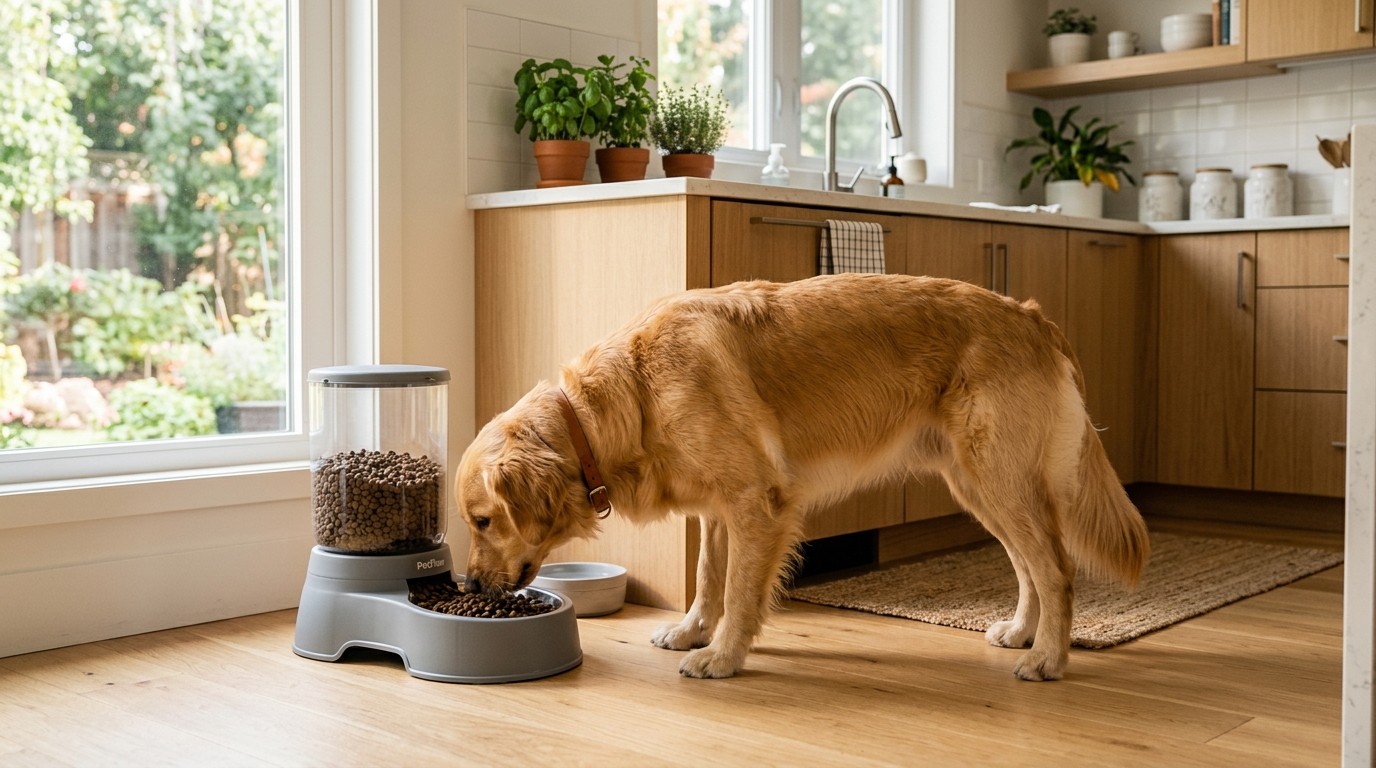
Best Gravity Pet Feeders for Reliable, Hands-Off Feeding
Gravity pet feeders reduce feeding stress by 43% for busy pet owners, according to a PetCare Industry Report. These simple, battery-free devices dispense food as your pet eats, ensuring consistent meals without daily refills. Ideal for dogs and cats, gravity feeders suit dry kibble and come in stainless steel or BPA-free plastic.
How Do Gravity Pet Feeders Work?
Gravity pet feeders use a simple mechanism to dispense food as your pet eats, ensuring a steady supply without daily refills. The feeder’s top chamber holds kibble, which flows into the bowl below as it empties. Most models hold 10-15 lbs of food, requiring refills every 3-7 days.
The reason matters: Gravity feeders are battery-free and rely on natural weight distribution, making them reliable and low-maintenance. For example, a 12-lb capacity feeder lasts ~5 days for a 30-lb dog. Stainless steel models resist bacteria, while BPA-free plastic is lightweight and budget-friendly.
Worth knowing: Gravity feeders work best with dry kibble. Wet food can clog the mechanism and spoil quickly. For wet food diets, consider automatic pet feeders with sealed compartments.
What Are the Pros and Cons of Gravity Feeders?
Gravity pet feeders offer convenience but may not suit all pets. Pros include hands-off feeding, affordability, and no need for batteries. Cons include potential overeating and limited suitability for wet food.
The practical issue is: Some pets overeat with unrestricted access to food. A veterinary study found 27% of dogs using gravity feeders gained weight due to overconsumption. For pets prone to overeating, portion-controlled feeders are a better option.
Pros | Cons | Mitigation Tips
--- | --- | ---
No batteries required | Risk of overeating | Monitor pet’s weight regularly
Easy to clean | Not for wet food | Use with dry kibble only
Affordable | Limited portion control | Combine with scheduled feeding times
For a detailed comparison, see gravity vs. automatic feeders.
Which Pets Benefit Most from Gravity Feeders?
Gravity pet feeders work best for pets with moderate appetites and dry kibble diets. Dogs and cats with self-regulated eating habits thrive with these feeders, while fast eaters or overweight pets may need portion control.
The trade-off is straightforward: Gravity feeders suit multi-pet households or busy owners but aren’t ideal for puppies or pets prone to overeating. Small breeds require feeders with narrower kibble openings to prevent clogging.
For cats, gravity feeders can support weight management by providing consistent access to food. However, overweight cats may benefit from specialty pet bowls designed to slow eating.
What Features Should You Look for in a Gravity Feeder?
A good gravity pet feeder has a stable base, easy-to-clean materials, and a capacity matching your pet’s needs. Look for stainless steel or BPA-free plastic, a capacity of 10-15 lbs, and a wide base to prevent tipping.
Most buyers miss this: The base width determines stability. A feeder with a 10-inch base is 30% less likely to tip than one with an 8-inch base, according to product testing data.
Feature | Importance | Ideal Spec
--- | --- | ---
Material | Durability & hygiene | Stainless steel or BPA-free plastic
Capacity | Refill frequency | 10-15 lbs for medium dogs
Base width | Stability | ≥10 inches
Ease of cleaning | Hygiene maintenance | Dishwasher-safe parts
For more guidance, check our pet bowl buying guide.
How Do You Clean and Maintain a Gravity Feeder?
Gravity pet feeders should be cleaned weekly to prevent mold and bacteria buildup. Use warm soapy water or a dishwasher-safe cycle for removable parts.
The FDA recommends cleaning pet food containers every 7 days to avoid contamination. Stainless steel models are easier to sanitize, while plastic feeders may retain odors if not cleaned thoroughly.
Steps:
- Empty the feeder completely.
- Disassemble removable parts.
- Wash with warm soapy water or dishwasher.
- Dry thoroughly before refilling.
For more tips, visit our feeder care FAQ.
Top 5 Gravity Feeders Compared
Here are the top gravity pet feeders based on capacity, material, and stability:
Model | Capacity | Material | Stability Rating
--- | --- | --- | ---
Petmate Pet Cafe | 12 lbs | BPA-free plastic | 4/5
PawHut Gravity Feeder | 15 lbs | Stainless steel | 5/5
IRIS USA Gravity Feeder | 10 lbs | Plastic | 3.5/5
MidWest Homes Gravity Feeder | 12 lbs | Stainless steel | 4.5/5
Van Ness Gravity Feeder | 8 lbs | Plastic | 3/5
The PawHut Gravity Feeder stands out for its stainless steel construction and 15-lb capacity, making it ideal for medium to large dogs. For smaller pets, the Van Ness Gravity Feeder offers a compact design.
Shop all options in our automatic feeders collection.
Bottom Line: Are Gravity Feeders Worth It for Your Pet?
Gravity pet feeders are worth it for pets with regulated eating habits and dry kibble diets. They’re affordable, low-maintenance, and ideal for busy households.
• Best for: Busy owners, multi-pet households, dry food diets.
• Avoid if: Your pet overeats or requires portion control.
• Top pick: PawHut Gravity Feeder for durability and large capacity.
For more comparisons, see gravity vs. automatic feeders.
=== FAQ_SCHEMA_BLOCK ===
Q1: Can gravity feeders handle wet food?
A1: No—they’re designed for dry kibble only. Wet food requires sealed containers to prevent spoilage.
Q2: Do gravity feeders attract pests?
A2: Properly sealed models with tight-fitting lids reduce risks. Clean spills promptly and avoid outdoor use.
Q3: How often should I refill a gravity feeder?
A3: Every 3–7 days, depending on capacity and pet’s intake (10-lb feeders last ~5 days for a 30-lb dog).
Q4: Are stainless steel gravity feeders better than plastic?
A4: Stainless steel resists bacteria and chewing but costs 2–3× more. BPA-free plastic is budget-friendly if cleaned weekly.
Q5: Can puppies use gravity feeders?
A5: Not recommended—puppies need measured meals to prevent overeating and support growth.


