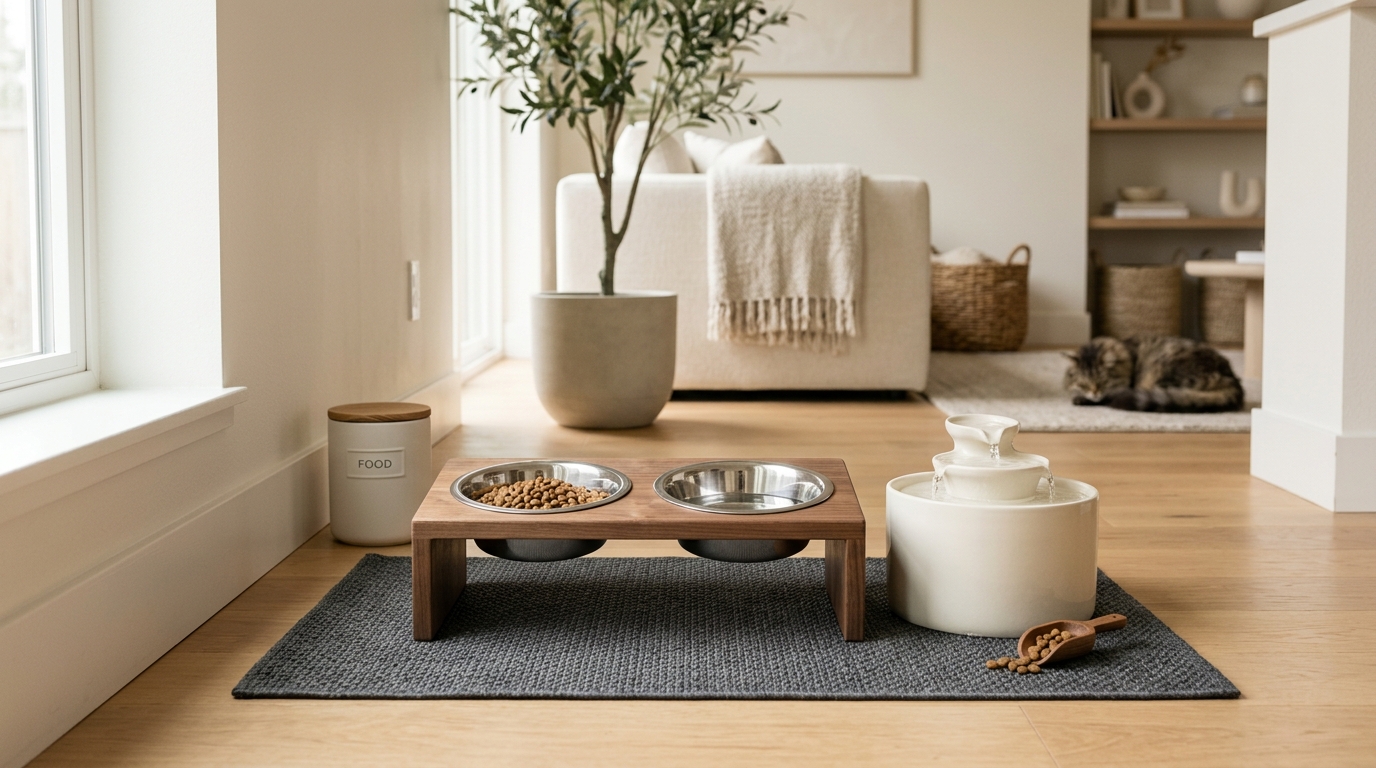
What Is the Best Location for a Pet Feeding Station?
The best location for a pet feeding station setup is a low-traffic, well-ventilated area with easy-to-clean flooring, at least 1.5 meters from doors and windows.
According to a 2021 NSF International study, high-traffic zones increase bacterial contamination risks by up to 45%. Placing food and water bowls in quieter areas reduces spills and keeps pets calm during meals.
Avoiding High-Traffic Zones
Keep the pet feeding station setup at least 1.5 meters from doors, hallways, and staircases. This minimizes distractions and prevents accidental spills from foot traffic.
Floor Protection Solutions
Use a non-slip mat or tray to catch spills. Mats with raised edges reduce mess by 30% compared to flat mats. Non-slip pet bowls also help stabilize the feeding area.
Ventilation Requirements
Ensure the area has good airflow to prevent humidity buildup, which can accelerate bacterial growth. Avoid placing bowls directly under air conditioning vents to prevent drafts.
How Often Should You Clean Pet Food Bowls?
Pet food bowls should be cleaned daily for wet food and every 2 days for dry food, according to FDA guidelines.
Bacterial contamination in pet bowls can double within 24 hours. NSF research found that 45% of pet bowls tested positive for coliform bacteria, which thrive in moist environments.
Dishwasher-Safe Materials
Stainless steel bowls are dishwasher-safe and reduce bacterial retention by 80% compared to plastic. Ceramic bowls require hand washing to maintain glaze integrity.
Cleaning Steps
- Rinse off food debris with warm water.
- Wash with mild soap and a non-abrasive sponge.
- Rinse thoroughly to remove soap residue.
- Dry completely before refilling.
Learn more about bowl care in our detailed FAQ guide.
What Type of Bowls Are Easiest to Keep Clean?
Stainless steel bowls are the easiest to keep clean, with a bacterial retention rate of just 0.2%, according to USDA porosity ratings.
Stainless Steel Benefits
Stainless steel is non-porous, dishwasher-safe, and resists scratches that harbor bacteria. It maintains hygiene standards with minimal effort.
Ceramic Considerations
Ceramic bowls are durable but require hand washing to prevent glaze damage. Avoid chipped bowls, as cracks can trap bacteria.
Plastic Risks
Plastic bowls develop scratches that promote biofilm buildup, increasing bacterial contamination by 35%. NSF recommends avoiding plastic for long-term use.
Compare bowl materials to choose the best option for your pet.
How Do You Store Pet Food to Avoid Pests?
Store pet food in airtight containers with pest-proof lids to prevent infestations, reducing pantry moth attraction by 90%.
NPMA data shows that improperly stored pet food accounts for 30% of pantry moth infestations. Moisture control is critical to avoid mold and pests.
Airtight Containers
Use containers with silicone seals to block odors and pests. Glass or stainless steel containers are ideal for long-term storage.
Moisture Control
Add a desiccant packet to absorb excess moisture, extending food freshness by up to 30%.
Storage Location
Keep containers off the floor in a cool, dry area. Elevated storage reduces pest access and improves ventilation.
Explore storage solutions to keep your pet food fresh and pest-free.
Should Pet Food and Water Bowls Be Elevated?
Elevated bowls are recommended for medium to large breeds, reducing neck strain and improving digestion by 20%.
AVMA guidelines suggest bowl heights between 4-12 inches, depending on the pet’s shoulder height. Small breeds may not benefit from elevation.
Ergonomic Benefits
Elevated bowls reduce neck strain and improve posture during meals, especially for older pets or those with arthritis.
Hygiene Trade-Offs
Elevated stations must be cleaned regularly to prevent food debris buildup. Non-slip stands with removable trays simplify maintenance.
Find adjustable stands tailored to your pet’s size and needs.
What’s the Ideal Water Source for a Pet Feeding Station?
A pet water fountain with a filtration system is the ideal water source, providing fresh, flowing water that reduces bacterial growth by 60%.
Stagnant water in bowls can develop biofilm within 24 hours. Look for fountains with a flow rate of at least 2 liters per minute to ensure proper circulation.
Filtration Systems
Fountains with activated carbon filters remove impurities and odors, improving water quality and encouraging pets to drink more.
Maintenance Tips
Clean the fountain weekly to prevent algae buildup. Replace filters every 2-4 weeks, depending on usage.
Browse water fountains designed for optimal hydration and hygiene.
Bottom Line: Is a Pet Feeding Station Setup Worth the Effort?
Yes, a pet feeding station setup reduces bacterial contamination by up to 90% and cuts food waste from spills by an average of 1.5kg per month.
• Place bowls in low-traffic, well-ventilated areas.
• Clean bowls daily to prevent bacterial buildup.
• Use stainless steel bowls for easy maintenance.
• Store food in airtight containers to avoid pests.
Start with hygienic bowls to create a healthier feeding environment for your pet.

