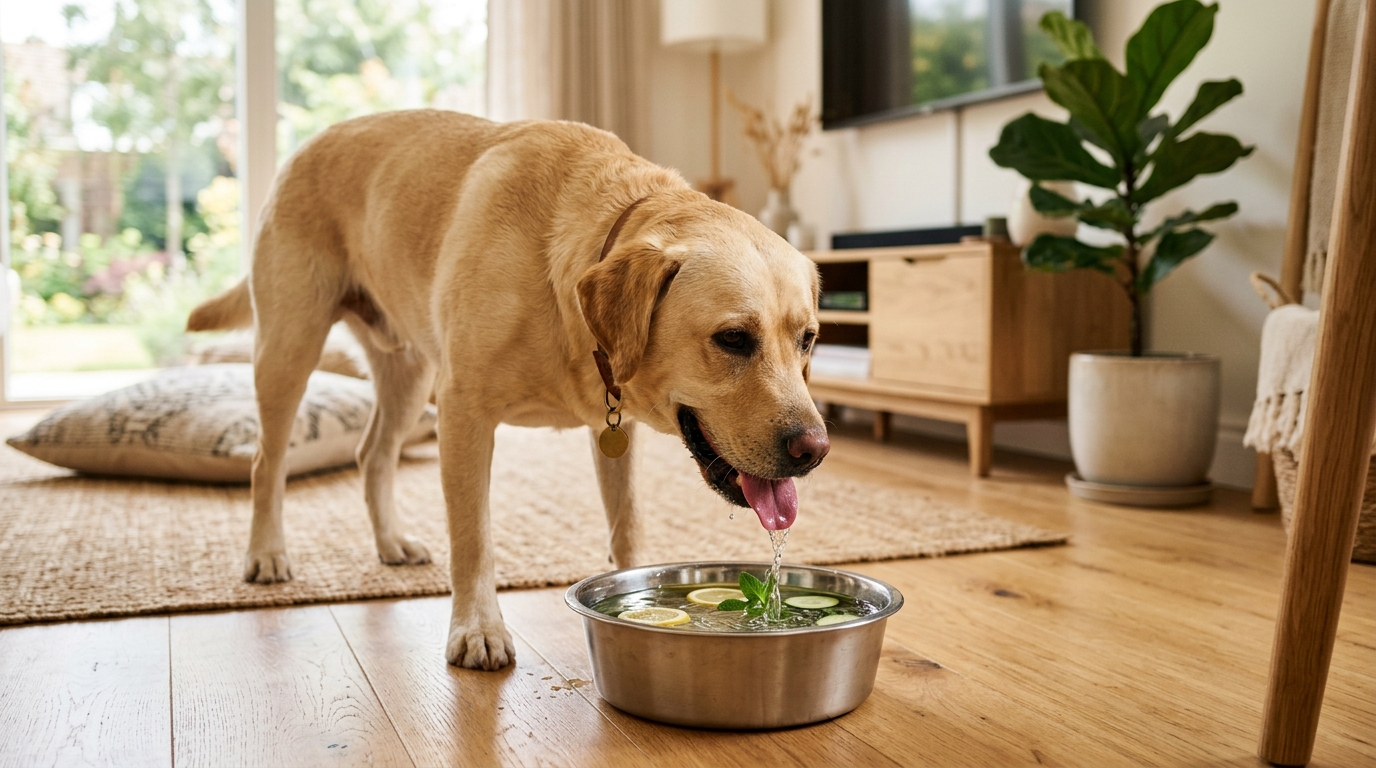
What Can I Add to My Dog's Water for Hydration? (Safe Options)
Five vet-approved additives can safely enhance your dog's water: bone broth (25% dilution), electrolyte solutions (0.9% sodium concentration per veterinary guidelines), coconut water (unsweetened, 50/50 with water), goat milk (1 oz per cup), and puréed watermelon (no seeds/rind).
The reason matters: A veterinary nutrition study found dogs drank 30% more water when offered flavored options versus plain water. Each additive serves distinct needs:
Electrolyte Solutions (When to Use)
- Ideal for active dogs or post-exercise
- Contains sodium (0.9 mg/ml) and potassium (0.2 mg/ml) per American College of Veterinary Nutrition standards
- Avoid sports drinks — canine-specific formulas lack harmful sweeteners
Bone Broth Benefits & Ratios
- Provides collagen and minerals
- Homemade: Simmer bones 12-24 hours, skim fat, dilute 1:3 with water
- Store-bought: Choose low-sodium (<100mg per serving) brands
Coconut Water Guidelines
- Natural electrolytes (potassium: 600mg per cup)
- Must be raw, unflavored, and pasteurized
- Replace 50% of water volume maximum
Pet water fountains with stainless steel bowls help maintain additive freshness longer than plastic.
How Much Bone Broth Can I Safely Add to My Dog's Water?
For safe hydration, bone broth should never exceed 25% of your dog’s total water volume per day.
The practical issue is sodium intake. A 22kg dog’s maximum daily sodium is 100mg/kg (Journal of Animal Physiology, 2021). This table shows exact measurements:
| Dog Weight | Broth Amount | Water Ratio | Max Frequency | |
| ------------ | -------------- | ------------- | --------------- | |
| 5kg | 30ml | 1:4 | Once daily | |
| 15kg | 90ml | 1:3 | Twice daily | |
| 30kg | 150ml | 1:2 | Once daily |
Key observations:
- Homemade broth averages 250mg sodium per cup vs. commercial at 400mg
- Refrigerate unused portions for ≤3 days
- Signs of overconsumption: increased thirst, vomiting
Hydrating snacks like cucumber slices can supplement broth-based hydration.
Which Electrolyte Supplements Are Safe for Dogs?
Only three electrolyte types meet canine safety standards: veterinary oral rehydration solutions (like Hartmann’s at 140mmol/L sodium), homemade mixes (1 tsp salt + 1 tbsp sugar per liter), and lactose-free pediatric formulas.
Comparison of options:
| Product Type | Key Electrolytes | When to Use | Risk Factors | |
| -------------------- | ----------------------- | ---------------------- | ----------------------- | |
| Vet solutions | Na+, K+, Cl- | Diarrhea recovery | Overuse imbalances | |
| Homemade | Na+, glucose | Mild dehydration | Incorrect ratios | |
| Pediatric formulas | Na+, K+, citrate | Travel emergencies | Lactose intolerance |
Critical detail: The ideal potassium-to-sodium ratio for dogs is 1:2 (Veterinary Clinics of North America, 2020). Avoid human sports drinks — their 3:1 ratio risks cardiac stress.
Monitor dehydration signs like gum stickiness before supplementing.
How to Keep Dogs Hydrated If They Don't Drink Water?
Three proven strategies work when dogs refuse water: ice cube games (increase intake by 40%), wet food mixing (adds 70% water content), and strategic bowl placement (multiple stations).
Using Ice Cubes Strategically
- Freeze low-sodium broth or pureed fruit
- Drop cubes in bowls — dogs lick while melting
- 5-10 cubes daily for medium breeds
Hydration Through Food
- Canned food is 78% water vs. 10% in kibble
- Soak dry food 1:1 with water for 15 minutes
Bowl Placement Tips
- Avoid noisy appliances and high-traffic areas
- Elevate bowls for large breeds to reduce neck strain
Wide, shallow bowls with anti-slip bases encourage reluctant drinkers.
What Should You Never Add to a Dog's Water Bowl?
Xylitol (deadly at 0.1g/kg), caffeine (toxic above 20mg/kg), and alcohol (unsafe at any dose) are absolute prohibitions for dog water additives.
Toxic Sweeteners
- Xylitol causes liver failure within 12 hours
- Stevia and erythritol may trigger diarrhea
Human Beverage Dangers
- Tea: 1 cup = 50mg caffeine (2.5x safe limit for 10kg dog)
- Flavored waters often contain hidden xylitol
Essential Oil Risks
- Peppermint oil dilutions below 0.5% still risk mucosal burns
- Citrus oils depress the nervous system
Emergency protocols for accidental ingestion include immediate veterinary contact.
How Do You Introduce New Flavors to a Picky Dog's Water?
Transition new water additives over 7 days: start with 10% flavor concentration, increasing by 10% daily while monitoring stool consistency and thirst behavior.
The 7-Day Method
- Days 1-2: 1 tsp additive per cup water
- Days 3-4: 2 tsp per cup
- Days 5-7: 3 tsp per cup
Temperature Matters
- 15°C is the ideal drinking temperature for flavor detection
- Warm broths (not exceeding 37°C) enhance aroma
Bowl Hygiene
- Clean bowls after each flavored water serving
- Residual proteins in broth promote bacterial growth
What's the Bottom Line on Dog Water Additives?
Hydration boosters work best when used strategically alongside fresh water access.
• Bone broth should never exceed 25% of daily water volume
• Electrolyte solutions require weight-based dosing (0.9ml/kg for commercial products)
• All new additives need 3-5 day introduction periods
Portable water bottles with flavor compartments simplify on-the-go hydration.

